


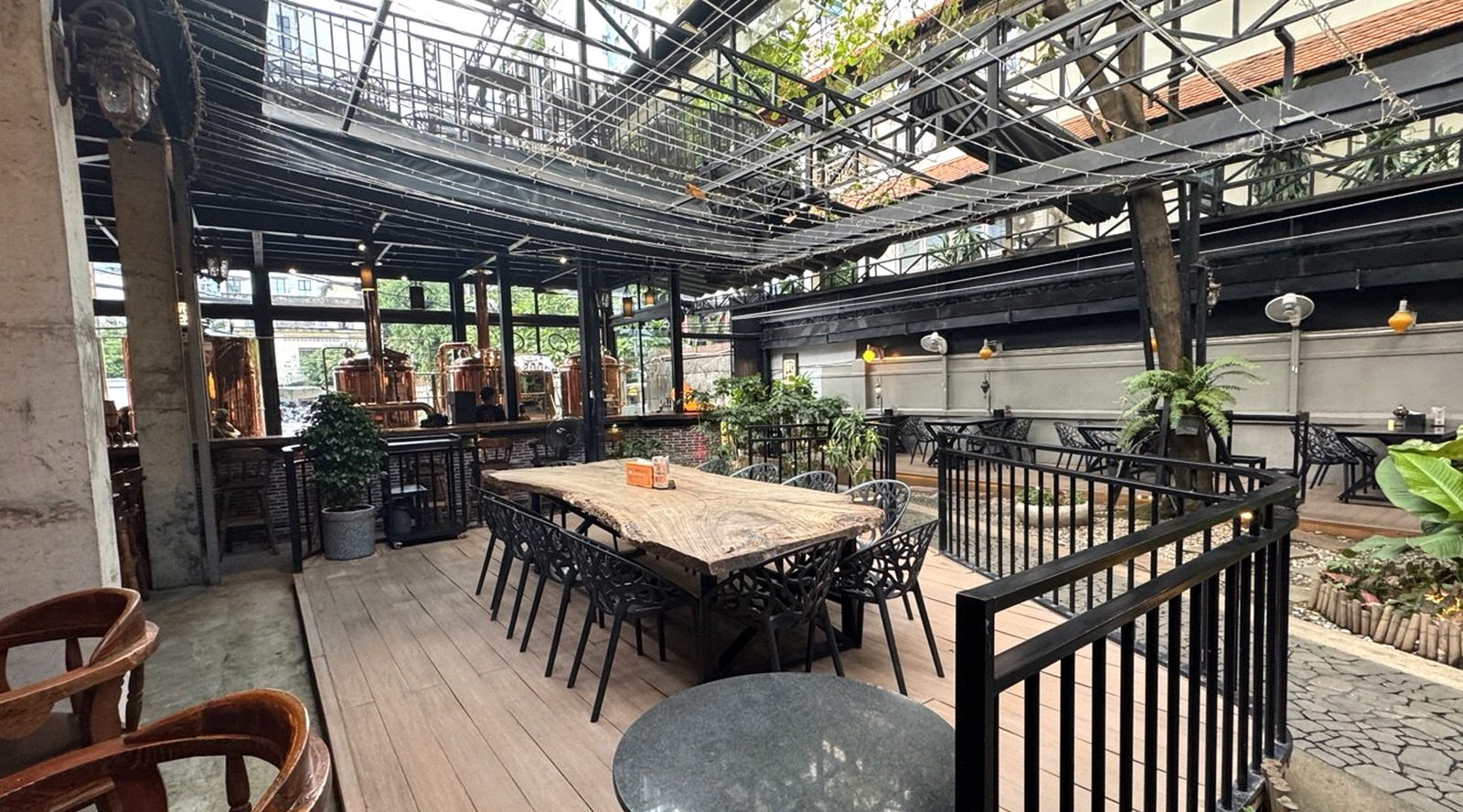
An operating café, bar or restaurant in Phnom Penh may be available with equipment, furniture and established processes already in place. But does buying one mean acquiring a profitable business?
An existing Italian pizzeria is currently advertised for sale in Phnom Penh. The asking price is $25,000.
At first glance, the offer seems attractive. Instead of building a restaurant from scratch, a prospective buyer has the opportunity to acquire an existing business.
But consider the situation from an investor's perspective.
What exactly is included in that $25,000?
Kitchen equipment? Furniture? The restaurant's trading name? Its customer base? The right to continue renting the premises?
And where are the financial figures?
What is the actual monthly revenue? How much remains after paying rent, staff, food suppliers, utilities and taxes?
Does the business have outstanding debts? Can the lease be transferred to a new owner? Will permits need to be renewed or reissued?
The publicly available listing does not answer these questions.
This is where the buyer's real work begins.
After all, the asking price and the value of a profitable business are two very different things.
Buying an existing business can genuinely save time and some initial expenses. But only when the buyer understands which assets, rights and obligations are included and whether the business can continue operating after the ownership change.
In this article, we explore what sellers in Cambodia actually mean by an “existing business for sale”, which documents and financial figures should be checked, what to look for during a property inspection and how to assess the real value of an offer.
Most importantly, we'll consider when acquiring an existing business makes financial sense and when starting your own project from scratch may be the better option.
Three Ways to Start a Restaurant Business in Cambodia
Entrepreneurs planning to operate a restaurant in Phnom Penh have several options. Starting from scratch or buying an operating establishment are not the only possibilities.
In practice, there are three models: opening your own restaurant, buying an existing business or renting an already equipped restaurant.
The last two options may seem similar, but their financial obligations, ownership rights and risks can be very different.
1. Open a Restaurant from Scratch
The entrepreneur develops the concept, finds suitable premises, negotiates a lease, purchases equipment, creates the menu, hires employees and organises daily operations.
The main advantage is the freedom to build a business around your own plan without paying extra for a previous owner's reputation, customer base or used equipment.
However, renovation, kitchen equipment, preparation of the premises and launch activities can require substantial investment. The first few months may also pass without the expected level of revenue.
2. Buy an Existing Restaurant
In this model, the seller offers an operating business for a specified price.
For example, the Italian pizzeria in Phnom Penh mentioned in the introduction is being offered for $25,000.
But what exactly is included in that price?
It could cover furniture, kitchen equipment, the trading name, certain intangible assets or the company itself. The precise scope of the transaction must be established through documents rather than the wording of an advertisement.
The buyer also needs to know whether the premises can continue to be rented and whether new permits will be required after the ownership change.
In our example, the monthly rent is $1,500, or $18,000 per year.
That means the buyer must budget at least:
-
$25,000 — a one-time payment to acquire the business.
-
$18,000 — twelve months of premises rent.
-
$43,000 — the combined cost of acquisition and one year's rent.
This does not yet include a rental deposit, utilities, employee salaries, food supplies or other operating costs.
The central question is: are you paying for a profitable business or simply a collection of used assets?
3. Rent a Ready-to-Operate Restaurant
There is a third option worth examining.
Another restaurant in Phnom Penh is available to rent for $5,000 per month. We also contacted the owner by telephone to clarify the conditions.
Under the terms described, the operator pays a deposit followed by monthly rent. Utilities, employee salaries, food supplies and all other operating expenses are paid separately.
The most important point is that the property owner receives $5,000 every month, regardless of whether the restaurant makes a profit or a loss.
Consider the rental commitment alone:
-
$5,000 — monthly rent.
-
$60,000 — rent for twelve months.
And that is before deposits, utility bills, wages, ingredients, marketing and other expenses.
An entrepreneur may be able to begin operations in premises that are already prepared, but also takes on significant fixed obligations.
The prospective tenant must confirm which equipment is included, who is responsible for maintenance and repairs, whether the restaurant concept can be changed and what happens if the lease is terminated early.
It is equally important to determine which licences and permissions the new operator will need.
Renting an equipped restaurant is not the same as buying an operating business. In one case, the entrepreneur acquires agreed assets or rights. In the other, the entrepreneur receives the right to use premises and specified equipment for an agreed period.
Which Model Is More Cost-Effective?
There is no universal answer.
Starting from scratch offers greater flexibility, but requires time and initial investment.
Buying an established business may allow a faster entry into the market, although the price may reflect assets and seller expectations that do not match the project's actual economics.
Renting an equipped restaurant can reduce the initial investment, but high monthly rent may quickly consume the available financial reserve.
Our conclusion: assess not only the amount required to begin operations, but also total expenses over the intended period, the assets and rights received, and obligations that continue even when the business generates no profit.
What Are You Actually Buying: A Business, Equipment or Someone Else's Liabilities?
Imagine agreeing on a price for a restaurant in Phnom Penh. The seller is ready to hand over the keys, equipment and staff contacts. It might appear that only the contract and payment remain.
But first, one essential question needs an answer: what exactly becomes the buyer's property?
An “existing business for sale” can involve very different types of transactions.
Purchasing Equipment and Other Assets
The seller transfers kitchen equipment, furniture, inventory and possibly the right to use a particular trading name.
The buyer receives the assets specified in the agreement, but does not necessarily acquire the legal entity that operates the business.
It is important to confirm that the seller actually owns the equipment and that it is not subject to security interests, unpaid instalments or other third-party claims.
The condition of the assets matters too. A commercial refrigeration unit that appears to work during an inspection may require expensive repairs just a month later.
Our advice: prepare a detailed asset inventory with photographs, serial numbers for valuable equipment and the results of operational checks.
Purchasing the Company
Another option is acquiring shares or ownership interests in the legal entity operating the restaurant.
In this case, the buyer acquires an interest in the company, while the company continues to own its assets and remain responsible for its existing obligations.
The business may therefore retain unpaid supplier invoices, tax liabilities, employment disputes, contracts and other risks.
Not every problem will necessarily appear in the documents presented during an initial meeting.
Our advice: arrange legal and financial due diligence with appropriately qualified specialists before completing the transaction.
Transferring the Lease and Rights to the Premises
Sometimes the most valuable part of an offer is not the equipment or the brand, but the commercial premises.
A restaurant may occupy a busy location in Phnom Penh where suitable properties are difficult to find.
However, if the seller is a tenant, they cannot automatically guarantee that the buyer will be allowed to operate there under the same terms.
Check whether the lease permits assignment, whether the landlord's approval is required and whether the landlord is willing to sign a new agreement with the buyer.
Our advice: do not pay for a business on the assumption that you can retain its premises until the lease arrangements and landlord's consent have been properly documented.
Can Everything Be Purchased Together?
Yes. A transaction may include equipment, inventory, brand rights, selected contracts and shares in the company.
But each element should be clearly identified in the documentation, with the transfer process agreed in accordance with applicable requirements.
It is particularly important to establish which permits remain valid after a change of ownership, which need updating and which must be obtained again.
The key takeaway: before negotiating the final price, determine not only the value of the offer but also the exact assets, rights and obligations being acquired.
Otherwise, two restaurants with identical $25,000 asking prices may represent completely different investments.
10 Essential Checks Before Paying a Deposit for an Existing Business in Cambodia
Suppose you have found a promising restaurant in Phnom Penh. The interior looks attractive, the kitchen is equipped, the team is working and the seller assures you that the establishment has a good reputation.
All these factors matter, but they do not answer the main question: is the business worth the asking price?
Before committing to the purchase — and especially before paying a non-refundable deposit — there are ten things to examine.
1. Who Actually Has the Right to Sell the Business?
First, establish who the seller is and on what legal basis they can dispose of the company or its assets.
If the legal entity is being sold, check its registration, ownership structure and the authority of the person signing the agreement.
If the transaction concerns equipment and other assets, request evidence that they genuinely belong to the seller.
In Cambodia, registered company information can be checked through the Ministry of Commerce system.
Warning sign: someone demands an immediate deposit but cannot provide documents confirming their authority to sell.
2. Is the Business Really Profitable?
“We have strong sales” is not proof of profitability.
Request financial records covering at least the previous twelve months: revenue, expenses, bank statements, point-of-sale records and tax documents.
Check more than gross sales. Review rent, salaries, ingredients, utilities, delivery-platform commissions and other expenses.
For example, a restaurant may generate $20,000 in monthly revenue while leaving the owner with very little after costs.
In some cases, the financial result may even be negative.
Also check whether the owner's own labour is reflected in the expenses. If the seller manages the restaurant every day without taking a salary, you may need to employ someone to perform that role after the purchase.
Warning sign: the seller presents an attractive profit spreadsheet but refuses to supply records that would allow the figures to be verified.
3. What Are the Lease Terms?
For a restaurant, café, bar or retail store, the lease may be one of the most important documents in the entire transaction.
Establish how long the agreement has left to run, whether rent increases are предусмотрed and whether the lease can be transferred to a new operator.
You should also establish who pays for property repairs, how the deposit is returned and whether early termination is permitted.
Imagine buying a restaurant for $25,000 only to learn a few months later that the landlord will not renew the lease.
In that situation, the value of the equipment may matter far less than losing the business location.
Warning sign: the seller promises there will be no problems with the lease, but the landlord will not confirm the terms.
4. What Condition Is the Equipment In?
Restaurant equipment may look expensive, but its actual value depends on age, condition and continued usability.
Inspect refrigerators, freezers, cookers, extraction systems, air conditioners, electrical wiring, water supply and drainage.
Where possible, arrange an inspection by a qualified technician and test equipment under operating conditions.
Confirm who owns each item. Some equipment may belong to suppliers, be leased or be subject to unpaid obligations.
Prepare a detailed list of everything included in the transaction.
Warning sign: the seller refuses to allow functional testing or insists that a visual inspection is sufficient.
5. Does the Company Have Debts or Outstanding Obligations?
An operating restaurant may have unpaid obligations to suppliers, the landlord, employees, banks or government authorities.
Determine which obligations exist and which may affect the purchaser under the proposed transaction structure.
It is particularly important to distinguish between buying assets and acquiring the company itself.
When a company is acquired, the legal entity continues to exist with its history and obligations, even if its ownership changes.
Warning sign: the seller offers a discount in exchange for immediate payment but refuses to discuss liabilities.
6. Are Business Registration, Taxes and Licences in Order?
The fact that a restaurant is open does not establish that all registrations and permits are in good standing.
Check the company's registration, tax status, the relationship between its registered activities and actual operations, and the necessary sector-specific licences.
Restaurants and other hospitality establishments may be subject to additional requirements.
Following a change of owner, legal entity or operator, some documents may need to be updated or reissued.
Warning sign: the seller claims that licences “automatically transfer” with the restaurant without supporting documentation or a valid legal basis.
7. What Will Happen to the Employees?
In a restaurant business, employees are more than a line in the budget.
An experienced chef, manager or kitchen team may be among the reasons the establishment operates successfully.
But will they stay after the sale?
Examine employment agreements, salaries, accrued employee entitlements and the arrangements for retaining or transferring employees.
It is also worth establishing how dependent the business is on particular individuals.
If the head chef leaves with the previous owner, the buyer may inherit a fully equipped kitchen without the team needed to prepare the dishes customers expect.
Warning sign: the seller promises that all employees will stay, but the staff know nothing about the proposed sale.
8. Why Is the Owner Selling?
The question seems obvious, but the answer deserves careful consideration.
There may be perfectly reasonable explanations: relocation, changing professional plans, releasing capital or retirement.
Other possibilities include falling revenue, conflict with the landlord, rising expenses or stronger competition.
The seller's explanation is not, by itself, evidence.
Compare it with the financial records, lease terms, operating history and actual conditions around the establishment.
Warning sign: the seller repeatedly changes their explanation or demands that the deal be completed before the documents can be reviewed.
9. How Much Money Will You Need After the Purchase?
The asking price rarely represents the full amount needed to continue operating.
In addition to paying the seller, you may need funds for rent, deposits, ingredients, wages, repairs, equipment replacement, permit updates and advertising.
Return to our Italian pizzeria example in Phnom Penh.
The asking price is $25,000, while monthly rent is $1,500.
The purchase price and twelve months of rent alone total $43,000.
You must also allow for operating expenses and a financial reserve in case revenue falls below expectations.
Warning sign: almost the entire available budget is spent on acquisition, leaving little money to run the business.
10. What Happens If the Transaction Does Not Go Ahead?
Before transferring a deposit, establish the conditions under which it will be refunded.
What if financial due diligence reveals major discrepancies? What if the landlord refuses the lease transfer? What if part of the equipment does not belong to the seller?
These situations should be addressed in the written transaction terms.
Final payment and the handover should be linked to agreed conditions, including satisfactory document checks, confirmation of asset ownership, resolution of lease arrangements and necessary approvals.
Warning sign: the seller insists on a large non-refundable deposit before providing access to the relevant documents.
Our Conclusion
Checking an existing business is not a sign of distrust towards the seller. It is a normal part of preparing for a serious transaction.
A genuine seller may have perfectly understandable reasons for selling, and the business may indeed have potential.
But buyers should make decisions based on documents and verifiable facts, rather than impressions of the interior, stories of strong sales or promises of quick returns.
The central rule is simple: check first, pay later.
For a foreign entrepreneur, completing all ten checks independently can be difficult. It involves communicating with the seller and landlord, requesting documents, inspecting equipment, clarifying lease conditions and coordinating with local specialists.
This is where Qunera Services can become your practical partner in Phnom Penh.
We help organise and coordinate preliminary checks when purchasing an existing business:
-
Communication with the seller: requesting information, clarifying sale conditions and identifying the assets included.
-
Property inspection: arranging site visits, assessing visible physical conditions and coordinating specialist equipment inspections.
-
Landlord communication: clarifying lease conditions, opportunities for continuation and requirements for the new business operator.
-
Documents and financial records: assisting with the collection of information for subsequent review by lawyers, accountants and tax specialists.
-
Business handover preparation: coordinating practical matters involving premises, equipment, suppliers and the new owner's initial operations.
Our aim is to help you obtain the clearest possible picture before making a decision: what exactly is being sold, what costs lie ahead, which questions remain unanswered and what requires further investigation.
Sometimes the most valuable assistance is not speeding up the transaction, but identifying an issue in time to decide that it would be better not to proceed.
Planning to buy an existing business in Cambodia?
Speak with Qunera Services about organising a preliminary inspection and coordinating the practical stages of your transaction.
Telegram: https://t.me/QuneraBusinessSetup
WhatsApp: https://wa.me/855767776732
Buy, Rent or Open a Restaurant from Scratch: Compare the Costs Yourself
We have examined three ways to start a restaurant business in Cambodia. But which option requires less money — not only at the beginning, but over the following years?
The answer depends on equipment costs, the purchase price, monthly rent, deposits and how long you intend to operate.
To make this comparison easier, Qunera Services has developed a free interactive calculator.
What Can You Calculate?
Compare three options:
-
Start a restaurant from scratch — prepare premises, purchase equipment and organise the opening yourself.
-
Buy an existing restaurant — acquire an operating business while continuing to pay rent for the premises.
-
Rent a ready-to-operate restaurant — use an equipped restaurant without purchasing the underlying business.
The calculator lets you adjust initial investments, monthly rent, deposits and the planning period.
Based on your inputs, you can see:
-
How much capital is required at the beginning.
-
How costs accumulate over the selected period.
-
When savings on initial investment may be outweighed by higher monthly rent.
-
How financial commitments differ between the three models.
The starting figures use the Phnom Penh examples discussed in this article: $25,000 to purchase an existing restaurant, $1,500 in monthly rent for that restaurant and $5,000 per month to rent another equipped restaurant.
You can change every figure to reflect an offer you are considering.
Try the calculator below and compare the options yourself.
Start, Buy or Rent a Restaurant?
Compare upfront payments and cumulative costs over your chosen period. All figures are editable.
Comparison Results
Qunera Services · Phnom Penh · Telegram Business Setup. This calculator is an illustrative cost comparison, not a financial forecast.
The calculator compares selected initial and rental expenses. It does not calculate the full profitability of a restaurant or automatically include every potential operating cost. Results should be used as a preliminary planning reference.
Buying an Existing Business in Cambodia: Check First, Decide Later
Buying an operating restaurant, café or another business may save an entrepreneur time spent searching for premises, buying equipment and organising daily operations.
However, an attractive asking price can conceal additional expenses, unfavourable lease terms or obligations the buyer discovers too late.
Looking at actual offers in Phnom Penh shows just how different the financial terms of seemingly similar restaurant projects can be.
The key is to assess not just the purchase price, but the full range of future costs, the condition of the business and the terms under which it can continue operating.
If you are considering purchasing an existing business in Cambodia, Qunera Services can help coordinate a preliminary review, inspect the property, communicate with the seller and arrange contact with relevant specialists.
Our aim is to help you understand the details before making a financial commitment.
Telegram — Business Setup: https://t.me/QuneraBusinessSetup
WhatsApp: https://wa.me/855767776732