


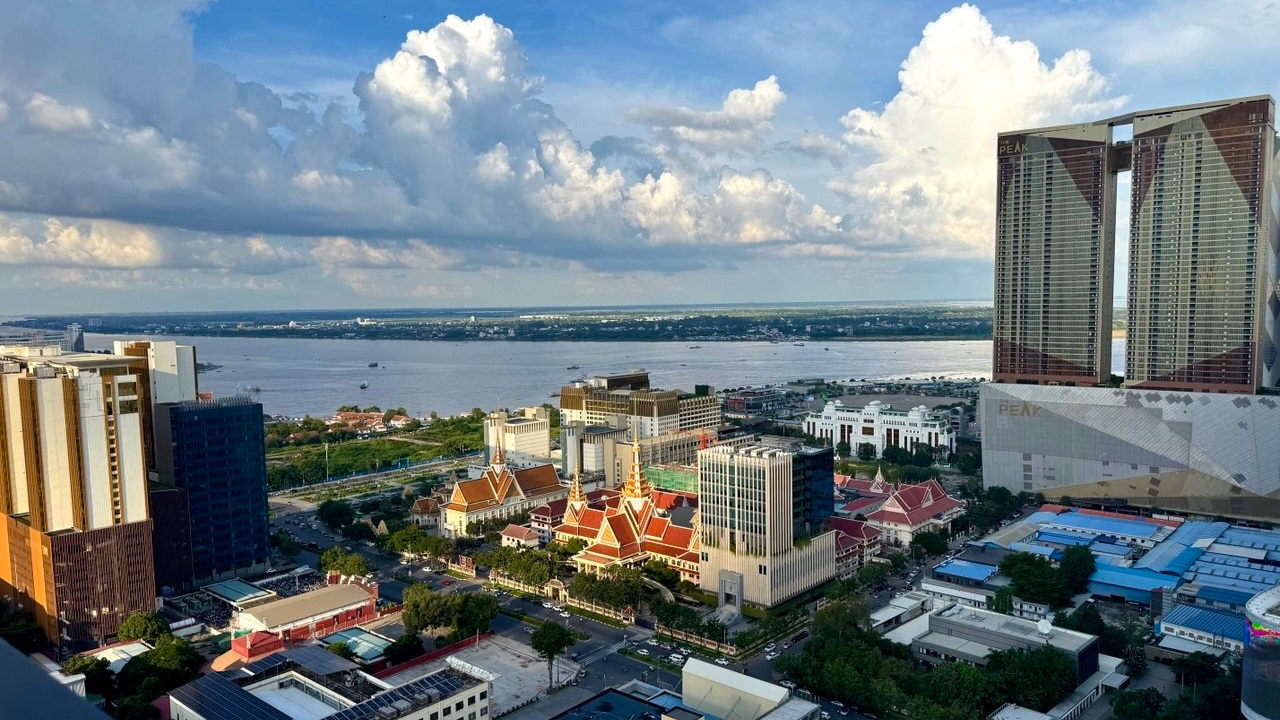
Cambodia offers foreign entrepreneurs something beyond the opportunity to register a business. Establishing your own company can be a practical first step towards living and working legally in Cambodia — while opening the door to business opportunities across Southeast Asia.
One accessible option is a sole proprietorship. You can begin the registration process remotely, travel to Cambodia to complete the necessary formalities, open personal and business bank accounts, and apply for the appropriate work permit and a renewable 12-month business visa extension. Your business does not need to generate revenue immediately, but it must continue to meet its tax reporting and other legal obligations.
In this guide, we explain the process step by step, from business registration and banking to work permits, immigration, family relocation and the opportunities Cambodia offers as a business base in Southeast Asia.
1. Can Foreigners Start a Business in Cambodia?
Yes. Cambodia allows foreign nationals to establish and operate businesses, subject to the requirements that apply to their chosen business structure and activity.
For entrepreneurs planning to work independently, provide services or establish a small local operation, a sole proprietorship may be an attractive starting point.
A sole proprietorship is a business owned by one individual. It can provide an official business identity, registration documents and a basis for conducting permitted commercial activities in Cambodia.
Unlike a Private Limited Company (Co., Ltd.), a sole proprietorship is not a separate legal entity that shields its owner from business liabilities.
This means the owner may be personally responsible for the business's debts and obligations.
Sole Proprietorship or Private Limited Company?
The right structure depends on what you intend to do.
A sole proprietorship may suit someone beginning with a relatively straightforward service business or an individual commercial activity.
A Private Limited Company may be more appropriate for entrepreneurs planning to bring in shareholders, attract investors, hire substantial teams or operate a business requiring a more complex ownership structure.
Some sectors also have additional licensing requirements or restrictions. Registering a business does not automatically authorise every type of commercial activity.
The important point is to select a structure that matches your genuine business plans, rather than choosing one solely for immigration purposes.
2. Can You Start Business Registration Remotely?
Yes. You do not necessarily need to be physically present in Cambodia to begin preparing and submitting a business registration application.
Cambodia operates an official online business registration system that connects the relevant government authorities.
Depending on the application, you or an authorised representative can prepare documents, submit information and begin the process before you travel.
What Can Be Prepared Before Arrival?
Typical preparations may include:
-
Choosing the business name and activity
-
Selecting the appropriate registration structure
-
Preparing passport and identification documents
-
Arranging a suitable registered business address
-
Preparing supporting documentation
-
Submitting the relevant registration applications
-
Coordinating appointments for the required in-person procedures
Having a local representative can make the process considerably easier, particularly if you are unfamiliar with Cambodian government procedures.
What Requires Your Presence in Cambodia?
Although registration can begin remotely, some practical steps normally require your personal attendance.
These may include opening bank accounts, identity verification, photographs and fingerprints for tax registration, and other procedures depending on the circumstances.
A practical approach is to begin the paperwork before travelling and organise the necessary appointments during your stay in Cambodia.
This allows you to spend less time dealing with administration after arrival.
3. Opening Personal and Business Bank Accounts at ABA Bank
Banking is an important part of establishing a business in Cambodia.
Many international entrepreneurs want both a personal account for everyday transactions and a separate business account for their commercial activities.
One of the available banking providers is ABA Bank (Advanced Bank of Asia), a major Cambodian commercial bank offering personal and business banking services.
Why Qunera Arranges Banking Before the Tax Office Visit
Business bank account information must be provided to the Cambodian tax authorities as part of the registration and compliance process.
In our practical registration workflow, we arrange the banking appointment before the owner's personal visit to the tax office.
This means the required banking information can already be available when the applicant attends the tax authorities for identification procedures.
While the official online registration system provides a period for submitting business bank details after tax approval, arranging banking first can help avoid returning later solely to complete this requirement.
What Documents Does the Bank Require?
Requirements vary according to the account type, the business structure and the applicant's circumstances.
For a business account, banks may request:
-
Valid passport and identification documents
-
Business registration certificate
-
Tax registration information, where applicable
-
Information about the business activity and address
-
Documents identifying the owner or authorised signatory
-
Additional information required under the bank's compliance procedures
Account holders and authorised signatories may be required to appear personally for identity verification and signing.
Account opening is subject to the bank's own approval process. Business registration does not guarantee acceptance by any particular bank.
Qunera can help prepare the necessary documentation and arrange assistance during the banking appointment.
4. Tax Registration: Photograph, Fingerprints and Business Details
Tax registration is another essential step.
The Cambodian General Department of Taxation (GDT) is responsible for business tax registration and the administration of applicable taxes.
The process involves submitting the required business information, obtaining the necessary tax documentation and completing identity verification requirements.
The Personal Visit to the Tax Office
Depending on the registration procedure, the business owner may need to attend the tax authorities in person.
This includes having a photograph taken and fingerprints scanned.
Based on our practical experience assisting with local procedures, it is helpful to prepare the relevant business documents and bank account information before the appointment.
Tax registration may involve obtaining documents such as a tax identification number and a Patent Tax Certificate, depending on the business's registration and tax classification.
It is important to ensure that the registered business address, business activity and other details are accurate.
After registration, the owner must continue to comply with all applicable tax filing and payment requirements.
5. From Business Registration to a 12-Month Visa Extension
For many international entrepreneurs, registering a business is not only about starting commercial activity.
It may also form part of their plan to establish a longer-term presence in Cambodia.
Cambodia offers an Ordinary Visa (Type E) for eligible foreign nationals, including people travelling for business-related purposes.
The initial visa normally permits a stay of 30 days following entry.
Eligible holders can subsequently apply for an appropriate extension of stay, including a business-related extension, commonly known as an EB extension.
Why Choose a 12-Month Extension?
Depending on eligibility and the documentation provided, extensions may be available for different periods, including up to 12 months.
Many long-term foreign residents prefer a 12-month extension because it can offer:
-
Fewer renewal procedures
-
Greater convenience for everyday life and business planning
-
More predictable immigration arrangements
-
Potentially better value per month than repeatedly purchasing shorter extensions
-
Multiple-entry privileges where applicable to the approved extension
A registered business and appropriate supporting documents can help demonstrate the applicant's business purpose.
However, owning a registered business does not automatically guarantee a 12-month visa extension.
Immigration approval depends on the applicant's circumstances, the current rules and the documents required by the competent authorities.
An eligible applicant may also be able to extend their status in subsequent years, provided they continue to satisfy the applicable requirements.
6. Work Permits for Foreign Business Owners
A business visa and a work permit are not the same thing.
A visa or extension of stay concerns your immigration status. A work permit concerns your legal authorisation to work in Cambodia.
Foreign nationals carrying out business or professional activities in Cambodia are generally subject to the relevant work permit requirements.
This can include self-employed foreigners and individuals operating their own businesses.
Can a Sole Proprietor Apply for a Work Permit?
A properly registered sole proprietorship can form part of the documentation supporting a self-employed foreign national's work permit application.
Applications are handled under the Ministry of Labour and Vocational Training's procedures, including the Foreign Workers Central Management System.
Eligibility, supporting documentation, filing deadlines and renewal requirements must be checked for the individual applicant.
The work permit is not automatically issued merely because the business has been registered.
The combination of business registration, the correct immigration status and a valid work permit provides a lawful framework for a foreign entrepreneur's activities in Cambodia.
7. Can a Business Have Zero Revenue in Cambodia?
This is one of the most important questions for entrepreneurs who are planning their move but are not ready to launch commercial operations immediately.
A newly registered business may have a period during which it generates no revenue.
For example, the owner may still be preparing a service, researching the market, building a customer base or organising future operations.
Is There a Minimum Revenue Requirement?
A sole proprietorship is not generally required to achieve a particular amount of sales immediately after registration simply to exist as a business.
However, zero revenue does not mean zero legal obligations.
The business must continue to meet its registration, taxation and other compliance requirements.
The absence of revenue also does not create an automatic entitlement to a work permit or a particular visa extension. Those applications must independently meet the relevant requirements.
Filing Tax Returns With Zero Revenue
If a business has no taxable activity during a particular reporting period, its required declarations may reflect zero revenue, subject to the applicable accounting and tax rules.
This is commonly described as nil filing or zero-revenue reporting.
It does not mean that the owner can simply stop filing returns.
Depending on the registration and taxpayer classification, ongoing obligations may include:
-
Monthly tax declarations
-
Annual tax returns
-
Annual Patent Tax obligations
-
Business registration renewals or other administrative filings
-
Accurate bookkeeping and document retention
-
Applicable employment and social security requirements
Even a business without revenue may have expenses, fees or other transactions that need to be recorded and reported.
For this reason, it is sensible to arrange professional accounting support from the beginning.
What Does Zero Revenue Mean for a Business Owner?
It offers flexibility during the start-up phase.
You may have time to prepare your business, find customers and explore opportunities without assuming that revenue must appear immediately.
But the business must remain genuine, properly registered and compliant.
A registered business should never be treated as a substitute for complying with immigration, labour or tax laws.
8. Can Your Family Join You in Cambodia?
For entrepreneurs planning to relocate, the ability to move with their family is an important consideration.
Cambodia has immigration arrangements that may allow eligible spouses and dependent children to obtain an appropriate longer-term status.
A foreign business owner who has established a qualifying immigration status can explore the options available to their family members.
What Documentation May Be Needed?
Depending on the application, supporting documents may include:
-
Valid passports
-
Marriage certificate
-
Birth certificates for children
-
Evidence of the main applicant's immigration status
-
Proof of family relationships
-
Additional documentation required by immigration authorities
Foreign-issued documents may require translation or authentication.
Family members do not automatically receive the same visa status as the principal applicant. Applications and extensions are assessed according to the rules that apply to each person.
For families moving to Phnom Penh, it is also worth planning accommodation, school arrangements, healthcare and practical arrival support in advance.
9. Cambodia as a Business Base in Southeast Asia
Cambodia's appeal extends beyond business registration and immigration arrangements.
The country can also provide a base from which an entrepreneur explores opportunities throughout Southeast Asia.
An Accessible Starting Point
For suitable activities, Cambodia offers an established business registration framework, international banking services and opportunities in both domestic and cross-border commerce.
Operating costs can be competitive for certain business models, although actual costs depend on the location, industry, staffing and operational requirements.
Cambodia's tax system may also be attractive for some entrepreneurs, but taxes, fees and reporting obligations must be evaluated according to the specific business.
Opportunities in a Developing Market
Cambodia has a growing private sector, and some specialised services may face less competition than in more mature markets.
Examples worth investigating include:
-
Specialised technical services
-
Maintenance and property-related services
-
Business-to-business support
-
Digital services
-
Selected professional and consultancy services
-
Trade and distribution
-
Tourism-related services
Nevertheless, less competition does not automatically mean stronger demand or higher profits.
Market research, licensing requirements, local partnerships and customer expectations remain essential.
Opportunities Beyond Cambodia
Entrepreneurs based in Cambodia can explore commercial relationships with partners and customers in Thailand, Vietnam, Singapore, Malaysia and other regional markets.
Potential opportunities include sourcing, distribution, consulting, logistics and international service delivery.
However, registration in Cambodia does not automatically authorise a business to operate in other countries.
Cross-border activities may involve additional licences, registrations, taxes, customs procedures and other regulatory requirements.
For the right entrepreneur, Cambodia may nevertheless be a useful place to establish a business presence while developing a broader Southeast Asian strategy.
10. Moving to Cambodia: Housing and Relocation
Registering a business is only one part of an international move.
Finding a suitable home, understanding neighbourhoods and organising everyday necessities can be equally important.
This is particularly true for entrepreneurs who want to arrive in Cambodia with much of the preparation already completed.
Finding Accommodation Before You Arrive
A local representative can assist with identifying suitable apartments and arranging property viewings.
Remote assistance may include:
-
Searching for apartments that match your budget and preferences
-
Reviewing locations and neighbourhoods
-
Visiting selected properties on your behalf
-
Taking photographs and recording video walkthroughs
-
Checking visible defects and practical features
-
Communicating with landlords or property agents
-
Assisting with rental agreement arrangements
A property inspection is especially useful when you cannot personally visit Cambodia before deciding where to live.
Arrival and Local Assistance
Once you arrive, practical support can include airport transfers, temporary accommodation, SIM cards, transportation, banking appointments and help with local administration.
For families, additional planning may involve schools, healthcare providers and suitable residential areas.
Combining business setup and relocation assistance can make the move significantly more manageable.
11. How Qunera Services Can Help
Qunera Services is based in Phnom Penh, Cambodia.
We assist foreign entrepreneurs, investors and people planning to relocate by coordinating the practical steps involved in establishing themselves in the country.
Our assistance can include:
-
Preparing and coordinating business documents
-
Starting the registration process before your arrival
-
Assistance with business address arrangements
-
Accompaniment for tax registration procedures
-
Assistance with personal and business banking appointments
-
Coordination of work permit and visa-related procedures
-
Introductions to qualified accounting and legal professionals
-
Remote accommodation searches and property inspections
-
Airport transfers and arrival assistance
-
Local administrative and relocation support
We work with local specialists and service providers where appropriate. Government approvals, bank account acceptance and immigration decisions remain subject to the relevant authorities and institutions.
Your Next Step
If you are considering living or doing business in Cambodia, start by understanding which business structure and immigration arrangements fit your situation.
You do not need to complete every step alone.
Need help getting started in Cambodia?
Business Setup: https://qunera.online/en/business-setup
WhatsApp: https://wa.me/855767776732
Telegram: https://t.me/QuneraBusinessSetup
Website: https://qunera.online
Frequently Asked Questions
Can a foreigner register a sole proprietorship in Cambodia?
Foreign nationals may be eligible to register a sole proprietorship, subject to the applicable legal requirements and any restrictions relating to the proposed business activity.
Can I begin registering my business before travelling to Cambodia?
Yes. Business registration preparations and relevant online applications can begin remotely. However, banking and certain identification or registration procedures may require your physical presence.
Does my business need to generate revenue immediately?
A newly registered business can have periods without revenue. However, applicable accounting, tax filing, licensing and other compliance obligations remain in force.
Can my registered business support a 12-month visa extension?
A properly registered business may provide supporting documentation for an eligible business-related extension of stay. Approval depends on the individual's circumstances and immigration requirements.
Do I need a work permit if I own my own business?
Foreign business owners and self-employed persons carrying out work in Cambodia may be required to hold a work permit. The relevant requirements must be checked and satisfied.
Can I open a personal and business account at ABA Bank?
Eligible applicants can apply for personal and business banking services. The required documents, personal attendance and approval criteria depend on the account type and the bank's policies.
Can my spouse and children live in Cambodia with me?
Eligible family members may be able to apply for appropriate visas or extensions of stay. Each applicant must meet the relevant requirements, and supporting family documents may be necessary.
Sources and Further Information
-
Cambodia Online Business Registration — Official Government Portal
-
Obligations After Successful Business Registration — Cambodia Government
-
Ministry of Labour — Foreign Workers Central Management System
Last reviewed: October 2026.
Disclaimer: This article provides general information and does not constitute legal, immigration, tax or investment advice. Eligibility, administrative procedures, banking policies and government requirements may change. Business registration alone does not guarantee a visa extension, work permit or bank account. Seek advice from appropriately qualified professionals before making decisions or submitting applications.