


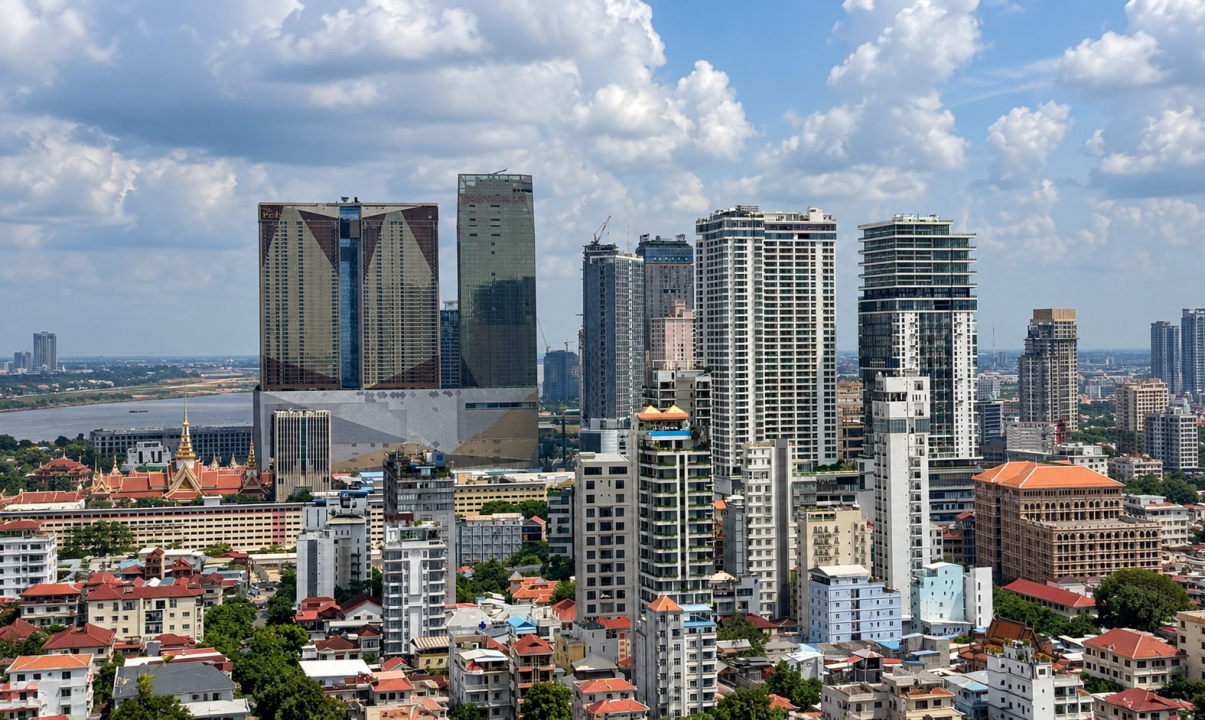
A beautiful apartment in a new Phnom Penh condominium. Floor-to-ceiling windows, a rooftop pool, stylish interiors and an attractive price.
The property agent walks you through the presentation, talks about the neighbourhood's potential and tells you Cambodian real estate is a great investment.
You buy the apartment, expecting to sell it for more in a few years.
Then life changes. You decide it's time to sell.
You publish the listing. The photos look great. Your asking price seems reasonable.
But nobody buys.
Or potential buyers appear, only to offer considerably less than you originally paid.
Meanwhile, the developer is still selling apartments in the same building, sometimes with discounts or flexible payment plans. New condominium projects are also going up nearby.
And an uncomfortable question emerges:
Why was buying the apartment so easy, while selling it feels almost impossible?
An attractive purchase price, promised rental returns and even an apparent increase in property value do not necessarily mean an apartment will be easy to resell.
There is one characteristic of property that rarely receives as much attention in marketing brochures as rooftop pools and panoramic views.
Liquidity: the ability to find a genuine buyer within a reasonable period at a price the market is actually willing to pay.
In this guide, we'll look at why an apartment can turn into capital you cannot easily access, what buyers often overlook and how to assess resale potential before paying a deposit.
Why Is Buying a Condo in Cambodia Easy, but Selling One Can Be Difficult?
When you buy an apartment in a new Phnom Penh condominium, the developer makes the purchasing process as appealing as possible.
Beautiful showrooms, professional photography, promotional offers, instalment plans, cryptocurrency payment options offered by some sellers, and presentations of future infrastructure. Sometimes a relatively small deposit is enough to reserve an apartment.
But a few years later, the situation changes.
Now you're the seller.
You don't have the developer's marketing budget, a dedicated sales team or dozens of apartments to offer potential buyers.
You do, however, have competition: other owners trying to sell their units and developers continuing to introduce new properties to the market.
The Asking Price Isn't the Selling Price
Suppose you bought an apartment for $80,000.
Three years later, similar apartments in your building are advertised for $95,000–$100,000.
It looks as though your investment has appreciated.
But there's a catch: an asking price tells you what a seller hopes to receive, not what a buyer is prepared to pay.
Listings that remain online for months without a sale are not proof of market value.
You might eventually need to reduce your price to $85,000. If you urgently need the money, you could have to accept even less.
These figures illustrate a possible scenario, not actual transaction prices in any specific condominium.
Your Resale Apartment Competes with Brand-New Units
Imagine someone choosing between two apartments.
The first is yours. You bought it three years ago and now want $95,000.
The second is a similar apartment still being sold by the developer. It might have a comparable price, but comes with an instalment plan, a furniture package or a discount.
You may not be able to offer those extras as a private seller.
That means even a perfectly good apartment can face a competitive disadvantage.
A Beautiful Brochure Doesn't Prove Liquidity
A rooftop pool, gym, stylish lobby and city views can certainly make a property more attractive.
But none of these features answers three essential questions:
-
How many people are actually looking to buy this type of apartment?
-
How many comparable properties are competing for their attention?
-
What prices are buyers genuinely paying in completed transactions?
This is why a property purchase should be judged not only by the apartment's quality, but also by its prospects for resale.
The key point: when you buy from a developer, you're the customer. One day, you may have to enter the very same market as a seller — under completely different conditions.
Rental Yield Doesn't Guarantee a Profitable Resale
“Buy an apartment and earn 8–10% a year.”
Numbers like these can look convincing in a property brochure, especially alongside photographs of a rooftop pool, sweeping city views and a beautifully furnished living room.
But two things must never be confused: the income an apartment may generate from rent and the price you may eventually receive when you sell it.
Imagine buying a condo in Phnom Penh for $80,000.
An agent estimates that it could generate $600 per month in rent.
On paper, the figures look attractive:
-
$600 — projected monthly rent.
-
$7,200 — annual rent with twelve fully occupied months.
-
9% — gross annual rental yield based on the purchase price.
But that's not net profit.
You may still need to cover building management fees, tenant-finding costs, property management, repairs, furniture replacement, taxes and other expenses.
And the apartment may not be occupied all year.
If it sits empty for two months between tenants, annual rental income falls to $6,000, before expenses.
“Guaranteed Rental Income”: Who Is Providing the Guarantee?
Some developers or property management companies advertise fixed rental returns.
Before relying on such an offer, find out:
-
Who is legally responsible for making the payments?
-
How long does the programme last?
-
Under what circumstances can payments stop?
-
Which expenses are deducted from the promised income?
-
What happens if the company promising the payments runs into financial difficulties?
Even an enforceable rental income agreement does not guarantee that someone will buy your apartment for a higher price a few years later.
Rental yield and resale liquidity are two separate measures. Both deserve attention.
What Does This Mean for Buyers?
Before purchasing, prepare two separate calculations.
First, rental economics: how much the apartment could realistically earn after expenses and potential vacancy periods.
Second, resale economics: how much money you might recover when you sell, taking into account market prices, transaction costs and the time required to find a buyer.
If the rental figures look attractive but you have no reliable evidence to support a future resale price, the investment picture remains incomplete.
The takeaway: a promised 8–10% annual return does not answer the question of whether you will recover your original $80,000 when you decide to exit the investment.
Property Liquidity Checklist: 12 Questions to Ask Before Buying
1. What Ownership Rights Are You Actually Buying?
The first thing to check isn't the swimming pool, the view or even the price.
Start by understanding exactly what you will legally own.
This is particularly important for foreign buyers in Cambodia.
Buying an apartment with a properly registered individual ownership title, commonly known as a strata title, is not the same as buying a unit under a developer's contract when the separate title has not yet been issued.
Other contractual arrangements also exist, and they should not automatically be treated as equivalent to registered ownership.
Before buying, establish:
-
Does the apartment already have a separate registered title?
-
If not, what rights are you acquiring and when is the title expected to be issued?
-
Who currently holds the legal rights to the property?
-
Are there registered mortgages, charges or other restrictions?
-
Can you transfer your rights to another buyer, and how would that transfer work?
-
Is the property eligible for foreign ownership under the applicable rules?
What to request: ownership documents, the draft purchase agreement, registration information and a written explanation of the future resale process.
Red flag: you're asked to pay first and told the documentation can be sorted out later.
Why it matters for liquidity: even an attractive apartment can be difficult to sell if the next buyer cannot clearly establish ownership rights or the procedure for transferring them.
2. How Many Apartments Are Already for Sale in the Same Building?
Why would a buyer choose your apartment over all the others?
Before investing, check how many comparable units are already being advertised in the condominium.
Look at floor area, level, views, condition, furnishings and price per square metre.
Compare listings from the developer with those from private owners.
And be careful with duplicate advertisements. The same apartment may be listed by several agencies, so ten listings don't necessarily mean ten different units.
What to check: current listings, distinct properties, how long they have been advertised and the range of asking prices.
Red flag: numerous similar apartments are for sale, but the seller's only argument for future liquidity is that the building is popular.
Why it matters for liquidity: the more directly competing units there are, the harder it may be to stand out without reducing your price or offering something extra.
3. What Prices Are Apartments Actually Selling For?
This may be one of the most important checks of all.
Imagine an agent shows you an apartment for $90,000.
To demonstrate its value, they pull up several listings. Similar apartments are advertised for $95,000 and $100,000.
Your apartment suddenly looks like a bargain.
But there's a problem.
An asking price reflects a seller's expectations, not the outcome of a transaction.
An apartment might be listed for $100,000 for months, then eventually sell for $80,000 — or not sell at all.
That's why completed sales matter more than advertisements.
In Cambodia, verified transaction data isn't always publicly available in a convenient format. Where evidence is limited, that uncertainty should be acknowledged rather than replaced with optimistic assumptions.
If you cannot find enough comparable sales within the building, consider similar projects nearby.
What to check: available evidence of completed transactions over the previous 6–12 months, the characteristics of those apartments and the difference between asking and achieved prices.
Red flag: the seller confidently predicts capital appreciation but cannot provide a verifiable example of a comparable resale.
Why it matters for liquidity: completed transactions provide far stronger evidence of what buyers are actually prepared to pay.
4. Could the Developer Become Your Biggest Competitor?
Why would someone pay you $95,000 for an apartment if the developer offers a similar one for less, with more flexible payment terms?
That's one of the less obvious risks of buying in a new condominium.
When you purchase, the sales team may emphasise the project's potential and future price growth.
But if the developer still has substantial unsold inventory several years later, your apartment could be competing directly with brand-new units in the same building.
And price isn't the only factor.
Developers may offer instalments, promotional packages, furnished units or additional services that are difficult for an individual seller to match.
What to check before buying:
-
How many units have been sold, and how many remain with the developer?
-
Are discounts, instalment plans or other incentives available for comparable apartments?
-
How have actual sale prices changed since the project launched?
-
Which nearby developments offer similar properties?
Red flag: the developer is actively discounting unsold inventory while the agent insists your apartment is certain to appreciate.
Why it matters for liquidity: when you resell, you'll be competing with professional property sellers who may have more tools to attract buyers.
5. Who Will Buy Your Apartment After You?
Be especially cautious when future demand is explained simply by saying that “more and more foreigners are moving to Cambodia”.
Even if interest in the country increases, that doesn't prove there will be buyers for your specific apartment at your intended price.
Try to identify the likely resale audience.
Would it be a local household, a foreign professional living in Phnom Penh, someone purchasing a home for personal use, or an investor seeking rental income?
Different buyers have different priorities — and different budgets.
What to check before buying:
-
Who actually buys apartments in the neighbourhood?
-
Which layouts and price ranges attract demand?
-
Are there completed sales of comparable units?
-
How broad is the potential buyer pool?
-
What alternatives are available within the same budget?
Red flag: an agent says “foreign buyers will definitely want it” but cannot explain who those buyers are or why this particular apartment would appeal to them.
Why it matters for liquidity: the narrower your potential buyer pool, the greater the risk of a prolonged sale or price reductions.
6. Is This Particular Apartment Good, or Just the Building?
Two apartments in the same condominium can have very different resale appeal.
One has a practical layout, plenty of daylight and an open view.
The other has a cramped kitchen, awkward room proportions and windows facing a neighbouring building.
Even with identical floor areas, buyer demand may be very different.
Pay particular attention to problems that cannot easily be fixed through renovation.
You can replace furniture. You can repaint walls. You can update the interior.
But you cannot change the floor level, reposition the windows or move the building next door.
What to check before buying:
-
Is the layout practical, and how effectively is the space used?
-
Does the apartment receive enough natural light?
-
Can you hear lifts, mechanical equipment, neighbours or busy traffic?
-
Are the views obstructed?
-
Is nearby construction likely to change living conditions?
-
Are there features that could significantly narrow the potential buyer pool?
Red flag: you're shown only the showroom and architectural renderings, with no real opportunity to inspect the actual apartment.
Why it matters for liquidity: when you eventually sell, buyers will compare your apartment's real strengths and weaknesses with competing offers.
Significant drawbacks may need to be offset by a lower price.
Before You Buy, Try Living in the Building for a Week
There's a simple way to learn more about a condominium than any sales brochure can tell you.
Spend seven days living there first.
In many occupied condominiums in Phnom Penh, short-term apartment rentals are available through booking platforms or local agents. If that's possible in the building you're considering, take advantage of it.
Ideally, rent an apartment with a similar layout, on a comparable floor and in the same part of the building.
A week gives you the chance to discover things that may never come up during a 30-minute viewing:
-
Noise. Can you hear neighbours, lifts, traffic or nearby businesses? What is it like early in the morning and late at night?
-
Lifts and shared facilities. How long do you wait during busy periods? Are the corridors, pool, gym and parking areas properly maintained?
-
Water, electricity and internet. Are the services reliable? How does the building deal with power interruptions?
-
Real costs. What does electricity cost? What building fees apply, and what do they include?
-
Building management. How quickly are maintenance requests handled? Do security, reception and maintenance staff respond effectively?
-
Neighbours and atmosphere. Is the building mostly occupied by long-term residents or short-stay guests? Do the shared spaces feel comfortable?
-
The neighbourhood. What is traffic like at rush hour? Where can you buy groceries? How noisy is the area in the evening? Are nearby construction sites disruptive?
Try to experience the building during the day and at night, on weekdays and over the weekend.
Spending a few hundred dollars on a trial stay could be far more useful than committing tens of thousands to an apartment whose disadvantages you discover only after buying it.
7. What Happens to the Building After the Developer Has Sold the Apartments?
What to check before buying:
-
Who manages the building, and how long has the management company been operating?
-
What is the monthly management fee, and what does it cover?
-
Are there unpaid fees from other owners that could affect building maintenance?
-
Who pays for major repairs to lifts, façades and shared systems?
-
Is there a reserve fund for significant future maintenance?
-
What condition are the parking areas, corridors, pool, security systems and building services in?
If the building is already occupied, talk to residents.
Ask how quickly maintenance issues are resolved and whether unexpected additional charges are common.
Red flag: common areas are visibly deteriorating, but the management company cannot explain how repairs will be funded.
Why it matters for liquidity: even an excellent apartment can become harder to sell when buyers see a poorly maintained building and anticipate further expenses.
8. How Much Will the Apartment Cost While You're Waiting for a Buyer?
What to check before buying:
-
What is the mandatory monthly management fee?
-
Which expenses continue even when nobody lives in the apartment?
-
Are there additional charges, taxes or other recurring obligations?
-
What would it cost to keep the apartment empty for 6, 12 or 24 months?
-
Do you have enough financial flexibility to wait for a suitable buyer?
Red flag: the investment projection assumes the apartment can be sold almost immediately and ignores the cost of waiting.
Why it matters for liquidity: the longer a property remains unsold, the more expenses its owner may incur — and the stronger the pressure to accept a lower offer.
9. Can This Apartment Really Generate Attractive Rental Income?
Suppose an agent claims you could rent the apartment for $700 per month.
Start by checking what similar units are advertised for in the same building and nearby developments.
If comparable apartments have been listed for months at $450–$500, how realistic is the $700 projection?
You should also account for vacancies, agent commissions, management costs, maintenance, furniture replacement and possible taxes.
Pay special attention to “guaranteed rental return” programmes.
You need to know who is promising the payments, for how long, under what conditions and what happens if that party stops paying.
What to check before buying:
-
What rent is genuinely being achieved for comparable apartments?
-
How long does it typically take to find a tenant?
-
Who handles tenants, maintenance and everyday property issues?
-
What are the management and upkeep costs?
-
Does the building allow short-term rentals?
-
What would the net rental income look like after expenses and vacancies?
Red flag: the promised yield comes entirely from the developer's marketing calculation, with no verified rental evidence.
Why it matters for liquidity: a property with a credible rental track record may appeal to investors. But rental potential alone does not guarantee a quick resale or an increase in market value.
10. What Will Be Built Next to Your Apartment in the Coming Years?
What to check before buying:
-
Are there undeveloped plots directly outside the windows?
-
What is already under construction nearby?
-
Which new condominium developments are entering the local market?
-
Is there publicly available information about plans for neighbouring plots?
-
Could construction affect daylight, views, noise or traffic?
-
Which infrastructure improvements could make the area more attractive?
Red flag: an agent promises “permanent panoramic views” even though the future use of neighbouring plots hasn't been checked.
Why it matters for liquidity: an apartment bought for its attractive views and peaceful setting may lose some of those advantages. New developments nearby can also increase competition when you come to sell.
11. How Much Will Buying and Reselling Actually Cost?
What to check before buying:
-
Which taxes and registration fees may apply when you purchase the apartment?
-
What taxes or charges could apply when you sell it later?
-
Who pays the agent's commission, and how is it calculated?
-
Will you need legal assistance to transfer ownership?
-
Are there unpaid management fees or other obligations to settle before resale?
-
How much might you spend on maintenance, repairs and furnishing during ownership?
Red flag: the projected investment return is simply the expected resale price minus the purchase price, with all other expenses ignored.
Why it matters for liquidity: additional costs increase the amount an owner hopes to recover. But the market is under no obligation to reimburse those expenses through a higher selling price.
12. What If You Need to Sell Quickly?
This is the final — and perhaps most uncomfortable — question in the checklist.
When people buy property, they usually imagine a favourable outcome.
Prices will rise. Tenants will pay on time. In a few years, a buyer will appear with an attractive offer.
But life doesn't always follow the investment plan.
You might need capital for a business, decide to move abroad or face changing personal circumstances.
And suddenly, an apartment you planned to hold for ten years needs to be sold within months.
What happens if nobody is willing to pay your asking price?
What to check before buying:
-
What resale price is supported by available market evidence?
-
What happens if the apartment's value is 10–20% below your purchase price?
-
How many months can you afford to wait for a buyer?
-
What will the property cost to maintain during that time?
-
What is the minimum amount you need to recover from the sale?
-
Are you financially prepared to sell at a loss?
Red flag: the purchase only makes financial sense if the apartment is certain to appreciate.
Why it matters for liquidity: a property shouldn't be evaluated solely on its hoped-for future value. You also need to understand how much capital you could recover under less favourable conditions.
The takeaway: before buying an apartment, don't just ask, “How much could I make?” Ask “How much could I lose if I need to sell earlier than planned?”
How to Interpret the Results: Which Risks Really Matter?
Once you've worked through all twelve checks, you should have a far more complete picture of the property than any sales brochure can provide.
But one question remains:
How do you know which problems are serious enough to change your decision?
Not every drawback makes an apartment a bad purchase.
An inconvenient floor, a noisy street or high management fees may already be reflected in the price. If you know about them in advance, you can factor them into your decision or negotiations.
Some problems, however, cannot simply be solved with a discount.
Unclear ownership, an inability to transfer the apartment legally, or significant unresolved charges and restrictions require more serious attention.
It helps to assess the findings at three levels.
Level One: Can You Legally Resell the Property?
If you don't know exactly which rights you're acquiring, who legally owns the apartment or how a future transfer will work, all the other selling points become secondary.
Establish ownership rights and the ability to transfer them first. Discuss price and returns afterwards.
Level Two: Is There Genuine Buyer Demand?
Once the documentation is in order, turn to the market.
Are people buying similar apartments? How many competing units are available? Can you find evidence of completed sales?
Don't confuse missing information with proof that there's no risk.
If an agent cannot show comparable transactions, that doesn't necessarily mean the apartment is impossible to sell. But it doesn't justify describing the property as highly liquid either.
The less reliable evidence you have, the more cautious your conclusions should be.
Level Three: What Will You Actually Get Back?
Even if an apartment is legally straightforward to sell and there are interested buyers, the financial outcome may still be disappointing.
Consider ongoing ownership expenses, the time it may take to find a buyer, agent commissions, applicable taxes and the possibility of accepting a discount.
Being able to sell a property and being able to sell it without a loss are not the same thing.
Four Questions Every Buyer Should Be Able to Answer
After completing the checks, you should understand:
-
Can I legally transfer this apartment to the next owner?
-
Who is likely to buy it, and what alternatives will they have?
-
What resale price is supported by the available market evidence?
-
How much money would I actually receive after all the costs?
If you don't yet have convincing answers, it's worth continuing your research before committing to the purchase.
How Qunera Services Helps You Check a Property Before Buying
Reading twelve checklist points is easy.
Collecting enough reliable information to answer them is much harder.
Especially if you live outside Cambodia, aren't familiar with the local market or cannot personally visit several condominium projects in Phnom Penh.
A sales presentation will give you polished images, attractive amenities and the project's strongest selling points.
But assessing liquidity requires different information.
How many comparable apartments are already for sale? What incentives is the developer offering? What condition is the building in? How much does it cost to maintain? Are there restrictions on renting? Which documents establish the seller's ownership rights?
And perhaps most importantly: how realistic are the claims about future property values?
Qunera Services helps buyers organise preliminary property checks on the ground before making a financial commitment.
How We Can Help
Compare competing listings. We can help gather and compare available offers for similar apartments in the same building and nearby projects, looking at prices, floor areas, levels, condition and duplicate listings.
Arrange property inspections. We can help organise visits to the apartment and shared areas, identify visible issues and note matters that require specialist technical checks.
Organise a trial stay. Where short-term rentals are permitted and available, we can help identify accommodation in the same condominium so you can experience the building before buying.
Communicate with sellers and developers. We can help clarify what's included in an offer, purchase conditions, additional charges, available units and the ownership transfer process.
Check building management arrangements. We can help obtain information about management fees, building rules, shared facilities and known maintenance issues.
Collect documents for professional review. We can assist with requesting relevant materials and coordinating with legal, tax and technical specialists.
Compare financial scenarios. We can help prepare an initial overview of acquisition and ownership costs, along with possible resale outcomes under different prices and waiting periods.
Our Goal Is to Help You See the Full Picture
When buying property, it's easy to focus on what an apartment costs today.
But it's just as important to understand what you'll be able to do with it tomorrow.
Rent it out? Live in it yourself? Transfer it to another owner? Sell it if your plans change?
Qunera Services helps gather and organise the information you need to make a better-informed decision.
Sometimes a review supports the case for buying.
Sometimes it reveals reasons to negotiate a more realistic price.
And sometimes it highlights risks that make another apartment the better option.
Because the goal isn't simply to buy property in Cambodia. It's to preserve your ability to make decisions about your capital in the future.
Planning to buy a condo in Phnom Penh?
Contact Qunera Services before paying a deposit. Let's discuss the apartment, the available documents and the practical checks worth carrying out locally.
Telegram — Qunera Property Care: https://t.me/QuneraPropertyCare
WhatsApp: https://wa.me/855767776732