


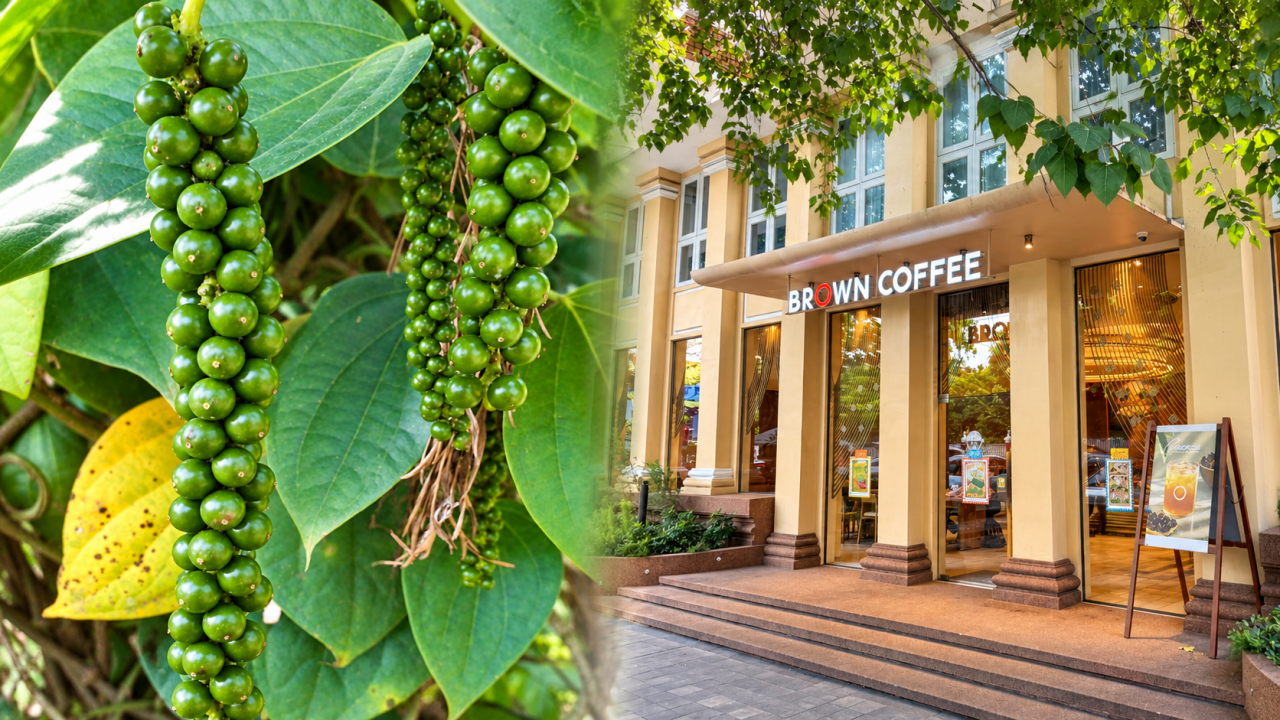
How BROWN Coffee built a homegrown café brand while Sela Pepper took a Cambodian crop to international buyers.
What could a coffee shop in Phnom Penh possibly have in common with a pinch of black pepper in a European kitchen?
More than you might think.
Behind them are two Cambodian business stories with very different routes to growth. One found its customers close to home, turning a familiar drink into a place people wanted to spend time. The other looked beyond Cambodia’s borders and built an export business around a crop that local farmers had been growing for generations.
Different customers. Different challenges. One question at the heart of both businesses: what are people actually willing to pay more for?
BROWN Coffee: The Business Was Never Just About the Coffee
Phnom Penh, 2009. A group of young Cambodian entrepreneurs sets out to create a café brand of its own. They are not inventing coffee, and they are not importing a global franchise. Instead, they see an opportunity to rethink the everyday coffee break.
At BROWN Coffee, the drink is only part of the experience. Contemporary spaces, food and pastries, attentive service and a welcoming atmosphere give customers a reason to meet friends, open a laptop or simply stay a little longer.
The business develops its own coffee roasting, invests in staff and builds a distinctive visual identity. What begins as a single café grows into a recognisable Cambodian chain, combining modern café culture with a local sensibility.
BROWN’s insight was simple: people don't come back for a cup of coffee alone. They come back for how a place makes them feel.
For anyone considering a local business in Cambodia, the lesson is useful. A crowded market is not necessarily a closed market. The opening may lie in a better customer experience, a more distinctive identity or the discipline to deliver consistently.
Sela Pepper: Taking a Local Crop Beyond Cambodia
Now leave the capital behind and head towards Memot in Tboung Khmum province, a pepper-growing region in eastern Cambodia.
Here, the challenge is almost the opposite. Rather than persuading customers to walk through the door, the business must get a Cambodian product onto shelves and into kitchens overseas.
According to the company’s own account, Nir Sela and Anna Cai discovered the character of local black pepper during a visit to Cambodia in 2014. In 2015, Sela Pepper established a processing facility in Memot.
Growing good pepper is not enough to build an export business. International buyers need dependable quality, food-safety procedures, careful sorting and processing, suitable packaging and consistent shipments. The product has to arrive with more than a compelling origin story; it has to meet expectations every time.
Sela Pepper built its model around that missing link between farm and foreign buyer. By working with growers and investing in processing and quality controls, it moved beyond trading raw agricultural produce.
The progress was measurable. In a March 2019 report, the company said it had shipped more than 100 tonnes of pepper during the previous year to destinations in Southeast Asia and Europe. That is a historical figure reported in 2019, not a claim about its current export volumes.
The opportunity was not simply to grow pepper. It was to make Cambodian pepper ready for international trade.
For investors, this is a different kind of lesson. Value can be created after the harvest — through processing, quality assurance, packaging, logistics and the trust that turns a first order into a lasting commercial relationship.
Two Businesses. Two Routes to Growth.
BROWN Coffee has built its identity around the domestic customer. Its strengths are customer experience, brand recognition and repeat visits.
Sela Pepper connects Cambodian production with demand abroad. Its strengths lie in processing, standards and export capability.
In one business, customers come to the product. In the other, the product travels to the customers.
Neither story suggests that business success in Cambodia is automatic. Both point to something more useful than a promise of quick returns: a viable business starts with a genuine need and a convincing way to serve it.
A Good Idea Is Only the Beginning
The inspiring part of a business story is often the idea. The difficult part is making it work.
Who are the customers? How do you find reliable suppliers and partners? Which premises make sense, and what does the lease actually say? What registrations, permits and professional advice will the business need?
For entrepreneurs and investors exploring Cambodia from abroad, those questions can be difficult to answer from a pitch deck or a website.
That is where a dependable partner on the ground can make a difference.
Qunera Services helps international entrepreneurs and investors navigate the local business environment: gathering information, checking prospective partners and premises, arranging meetings and coordinating practical matters in Cambodia. Where legal, tax or other specialist opinions are required, qualified professionals should be involved.
We cannot promise that every idea will become a success story. But better decisions begin with reliable information, careful checks and a realistic understanding of how things work locally.
Sometimes the most valuable thing an investor can have in a new country is someone trustworthy to turn to on the ground.
Qunera Services — your partner in Cambodia.
Discuss your business idea with Qunera Services on WhatsApp
Sources
- BROWN Coffee — Our Story
- Southeast Asia Globe — The Caffeine King (2013)
- Sela Pepper — Our Story
- Cambodia National Trade Repository — Sela Pepper Eyes New Markets in Asia and Europe (2019)
This article is for general information only. These companies’ experiences do not guarantee investment returns or constitute an investment recommendation. Qunera Services does not claim any affiliation with or endorsement by BROWN Coffee or Sela Pepper.