


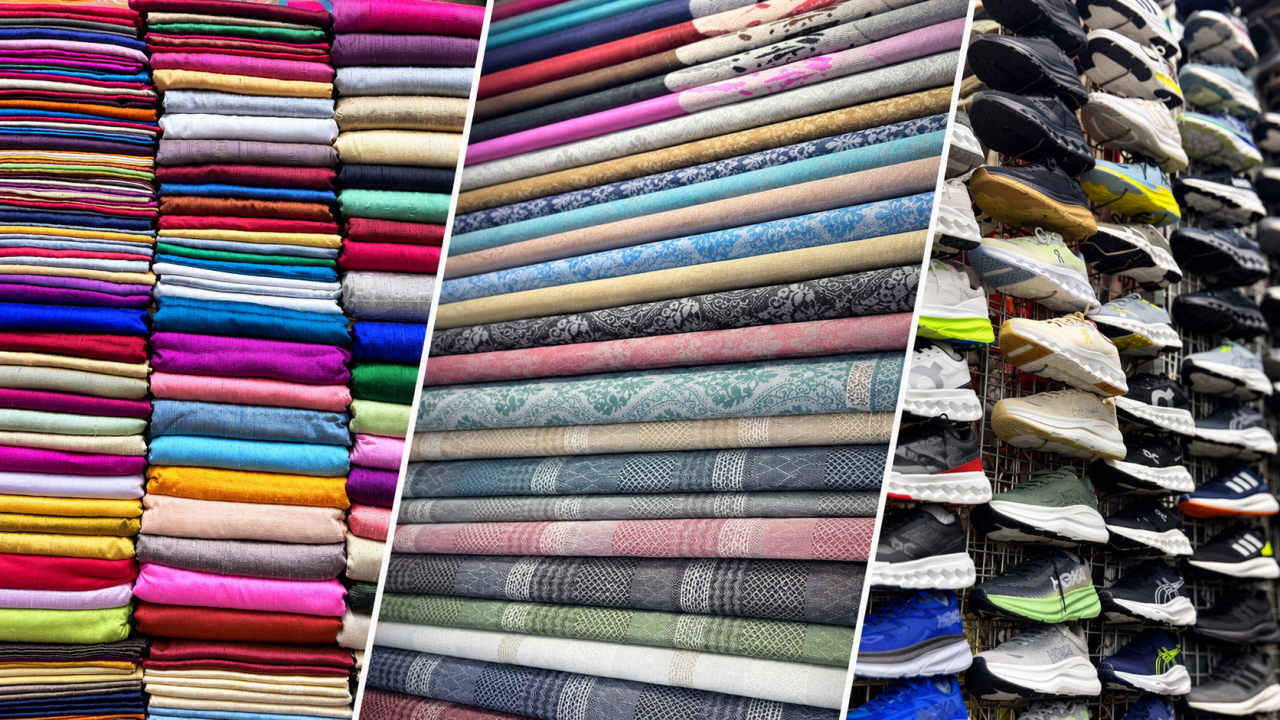
Global brands, established manufacturing facilities, and international export markets. How Cambodia became a major production hub — and how foreign investors can become part of this industry.
Cambodia: A Global Manufacturing Hub You Might Not Know About
The next time you buy a pair of sports shoes, a T-shirt, a backpack, or a pair of jeans from an international brand, take a closer look at the label.
You might find three familiar words: Made in Cambodia.
Over the past three decades, Cambodia has quietly established itself as an important manufacturing destination for garments, footwear, and travel goods — collectively known as the GFT industry.
This is no longer a small, emerging manufacturing sector. It is a multibillion-dollar export industry connected to some of the world's largest consumer markets and international brands.
In 2025, Cambodia's exports of garments, footwear, and travel goods reached approximately US$15.5 billion, representing a 15.7% increase compared with the previous year.
According to figures reported by Cambodia's Ministry of Commerce:
| Product Category | 2025 Exports | Annual Growth |
|---|---|---|
| Garments | $11.4 billion | +16.5% |
| Footwear | $2.09 billion | +24.5% |
| Travel goods and bags | $2.02 billion | +3.8% |
| Total | Approx. $15.5 billion | +15.7% |
The industry accounts for approximately half of Cambodia's merchandise exports. Figures published in early 2026 indicate that the sector includes more than 1,500 manufacturing establishments and units, providing employment to over 900,000 people.
For foreign investors, this sends an important message:
Cambodia already has an established industrial ecosystem. Investors are not starting from scratch.
And opportunities are not limited to multinational corporations with multimillion-dollar investment budgets.
1. Adidas, Nike and Puma: Why Global Brands Manufacture in Cambodia
Cambodia has become an important part of international manufacturing supply chains.
Well-known brands that have sourced products from Cambodian manufacturers include Adidas, Nike, Puma, Levi's, Gap, ASICS and New Balance.
However, there is an important distinction.
A brand sourcing products from Cambodia does not necessarily own a factory in the country. Many international brands work with independent manufacturers producing goods under contract.
Puma: Cambodia Among Its Leading Sourcing Countries
According to Puma's 2025 Annual Report, Cambodia ranked third among the company's sourcing countries by production volume.
Approximately 17% of Puma's global sourcing volume came from Cambodia, behind Vietnam and China.
This illustrates Cambodia's role in international footwear and apparel manufacturing.
The country is not merely an occasional production destination. It is an established part of the supply chains supporting major international brands.
Why Do International Companies Choose Cambodia?
Several factors explain the country's appeal:
-
An experienced workforce in garment and footwear production.
-
An established network of manufacturing facilities.
-
Capacity to handle large export orders.
-
Access to regional logistics and transportation routes.
-
Opportunities for foreign-owned manufacturing businesses.
-
Participation in international and regional trade agreements.
However, competitive production costs alone are not enough.
Factories working with international brands must meet demanding requirements relating to product quality, delivery schedules, workplace safety, labor regulations, and environmental and social standards.
For new investors, this creates both opportunities and challenges.
2. Three Major Segments of Cambodia's GFT Industry
Garment Manufacturing: The Largest Segment
Garment manufacturing represents the largest share of Cambodia's GFT exports.
Factories produce a wide range of products, including casualwear, sportswear, uniforms, knitwear, jeans, and other textile products.
Potential investment opportunities include:
-
Contract garment manufacturing.
-
Specialized apparel production.
-
Textile printing and embroidery.
-
Fabric cutting and finishing.
-
Packaging and accessories production.
-
Quality inspection and export preparation.
Investors do not necessarily need to establish a large factory immediately.
A specialized production facility or a business supplying existing manufacturers may offer a more accessible entry point.
Footwear: A Rapidly Expanding Export Segment
In 2025, Cambodia's footwear exports increased by approximately 24.5%, reaching US$2.09 billion.
This was one of the strongest growth performances among the three main GFT segments.
Footwear manufacturing involves far more than assembling finished shoes.
The industry requires soles, insoles, synthetic materials, adhesives, accessories, packaging, and specialized machinery.
Investment opportunities may exist in both complete footwear manufacturing and the supply of individual components and production services.
Travel Goods: Backpacks, Bags and Luggage
The third major segment includes backpacks, handbags, suitcases, sports bags, and other travel accessories.
Manufacturing these products combines sewing techniques, specialized materials, accessories, and quality-control processes.
Potential business models include:
-
Contract manufacturing.
-
Private-label production.
-
Accessories and components supply.
-
Packaging services.
-
Product development.
-
Export order management.
Each segment has its own technical requirements, investment costs, and competitive dynamics.
Investors should evaluate them individually rather than treating the entire GFT industry as one uniform market.
3. Why Cambodia Attracts Foreign Investors
100% Foreign Ownership
Cambodia allows foreign investors to own 100% of companies in many permitted business activities, including manufacturing.
For these businesses, Cambodian shareholders are generally not mandatory.
However, restrictions apply in certain areas, including direct foreign ownership of land.
Investors should select an appropriate legal structure and obtain professional advice before committing capital.
Investment Incentives
Cambodia's investment framework allows eligible projects to apply for Qualified Investment Project (QIP) status.
Depending on the activity and applicable requirements, approved projects may receive tax and customs incentives.
Applications are handled by the Council for the Development of Cambodia (CDC) or other competent investment authorities.
These incentives are not automatic.
Investors must establish whether their proposed activities meet the requirements and complete the relevant approval procedures.
Special Economic Zones
Cambodia has developed Special Economic Zones (SEZs) and industrial areas offering manufacturing premises and infrastructure.
Investors should assess locations according to:
-
Factory rental costs.
-
Workforce availability.
-
Electricity and water supply.
-
Transportation infrastructure.
-
Proximity to suppliers.
-
Access to ports and international shipping routes.
-
Expansion opportunities.
For some businesses, leasing an existing factory may be more practical than purchasing property or constructing a new manufacturing facility.
4. How Can Foreign Investors Enter Cambodia's Manufacturing Industry?
Entering the GFT industry does not necessarily mean building a factory.
There are several possible business models, each with different capital requirements and operational challenges.
| Investment Model | Capital Requirements | Entry Complexity |
|---|---|---|
| Establish a manufacturing factory | High | High |
| Acquire an existing factory or business stake | High | High |
| Supply materials and components | Low to high | Medium |
| Source manufacturers and coordinate orders | Relatively low | Medium |
These are general assessments. Actual investment requirements depend on business scale, equipment, inventory, contracts, and working capital.
Option A: Establish Your Own Factory
Building or leasing a manufacturing facility gives investors direct control over production, quality, and order fulfillment.
However, establishing a factory requires careful preparation, including equipment selection, recruitment, licensing, customer acquisition, and operational management.
The most important question is not simply how much a factory will cost.
It is who will purchase its products.
Option B: Acquire an Existing Manufacturing Business
Purchasing an established factory may provide immediate access to manufacturing capacity, experienced employees, and existing customer relationships.
However, an acquisition can also involve hidden liabilities.
These may include outstanding debts, unpaid taxes, labor obligations, licensing issues, or problematic contracts.
Comprehensive Due Diligence is therefore essential before completing an acquisition.
Option C: Become a Supplier to Existing Factories
Manufacturers continuously require fabrics, threads, zippers, labels, packaging materials, machinery, spare parts, and technical services.
Establishing a supply business may provide access to Cambodia's manufacturing sector without the capital requirements of operating an entire factory.
For entrepreneurs with established supplier relationships or specialized technical knowledge, this approach deserves consideration.
Option D: Organize Manufacturing for International Buyers
Entrepreneurs who already have overseas customers may coordinate production through existing Cambodian factories.
Their role can include identifying suitable manufacturers, negotiating production terms, arranging samples, monitoring quality, and managing export orders.
This business model allows entrepreneurs to participate in the manufacturing industry without necessarily owning production facilities.
The key advantage is the ability to work with Cambodia's existing manufacturing capacity rather than building everything from the beginning.
5. Step-by-Step Guide: Starting a GFT Business in Cambodia
Step 1: Choose Your Business Model
The first decision is defining exactly what your company will do.
Will it manufacture clothing, produce footwear components, supply packaging, provide factory maintenance, or coordinate international sourcing?
Each business model involves different financial requirements, licenses, staffing needs, and competitive pressures.
A clearly defined strategy should come before any significant financial commitment.
Step 2: Conduct Market Research and Financial Planning
Before investing, evaluate:
-
Demand from potential customers.
-
Existing competitors.
-
Machinery and equipment costs.
-
Factory rental and utility expenses.
-
Availability of skilled employees.
-
Raw material and component costs.
-
Logistics and customs duties.
-
Tax obligations.
-
Working capital requirements.
-
Potential returns and investment risks.
Special attention should be given to securing customers.
Even a modern factory with competitive production costs can become unprofitable when its machinery remains idle due to insufficient orders.
Step 3: Register Your Company in Cambodia
Foreign investors establishing manufacturing operations commonly consider incorporating a Cambodian limited liability company.
The registration process generally involves:
-
Business registration with the Ministry of Commerce.
-
Tax registration with the General Department of Taxation.
-
Compliance with applicable employer registration and labor requirements.
Depending on the nature and location of production, additional permits may be required for industrial activities, construction, fire safety, or environmental compliance.
Professional legal and accounting assistance is advisable before entering into binding agreements.
Step 4: Evaluate QIP Investment Incentives
Investors whose projects meet the applicable criteria may consider applying for Qualified Investment Project status.
Approved projects may be eligible for certain investment incentives, including tax and customs benefits, subject to applicable conditions.
Eligibility must be assessed individually.
Step 5: Find Suitable Manufacturing Premises
When selecting factory premises, consider:
-
Available production space.
-
Workforce accessibility.
-
Electricity and water infrastructure.
-
Transportation connections.
-
Equipment installation requirements.
-
Rental conditions.
-
Industrial, fire safety, and environmental compliance.
Location directly influences both operating costs and logistical efficiency.
Step 6: Calculate Labor Costs
Cambodia applies a sector-specific minimum wage to workers in textile, garment, footwear, travel goods, and bag manufacturing.
In 2026, the statutory minimum monthly wage for regular workers in these industries is US$210.
From January 1, 2027, the minimum wage increases to US$212.
Separate rates apply to probationary employees.
However, an employer's actual labor costs extend beyond the basic wage.
Additional obligations may include statutory allowances, overtime, social security contributions, paid leave, seniority-related payments, occupational safety measures, and other legally required benefits.
Consequently, the total monthly employment cost per worker will be higher than the minimum wage alone.
Step 7: Build Reliable Supply Chains
Manufacturing depends on a consistent supply of raw materials and components.
Some production materials may need to be imported.
Investors should calculate delivery times, customs procedures, warehousing expenses, and working capital requirements.
Supply disruptions can result in production delays and contractual problems.
Reliable supplier relationships are therefore essential.
Step 8: Secure Customers and Begin Production
Before launching full-scale operations, businesses should establish a clear sales strategy and confirm customer interest.
International buyers may require product samples, trial orders, factory inspections, and evidence of compliance with relevant standards.
Gradual expansion can help control financial and operational risks.
6. Understanding the Risks
Despite its established manufacturing base, Cambodia is not a risk-free investment destination.
International Trade and Tariffs
Changes in import duties, trade preferences, and rules of origin can influence the profitability of export-oriented manufacturing.
Investors should pay particular attention to current market-access conditions in the United States and European Union.
Competition from Other Manufacturing Countries
Cambodia competes with countries including Vietnam, Bangladesh, India, and Indonesia.
Labor costs alone do not determine competitiveness.
Productivity, transportation, access to materials, and customer requirements also play important roles.
Rising Operating Costs
Increases in wages, utilities, logistics expenses, and imported materials can reduce profitability.
Financial planning should account for potential cost increases over time.
Dependence on Major Customers
Factories relying on one or two large international customers face significant commercial risks.
Losing a major contract can threaten the financial stability of an entire operation.
Legal and Financial Risks
Acquiring an existing company requires careful investigation of licenses, debts, tax compliance, employee obligations, property arrangements, and commercial contracts.
Professional Due Diligence before completing a transaction can help identify issues that might otherwise become expensive problems.
7. The Next Opportunity: Supplying the Factories
Historically, much of Cambodia's garment and footwear industry has focused on labor-intensive manufacturing and final assembly.
However, the continued development of the sector creates opportunities for businesses supporting existing manufacturers.
Potential areas include:
-
Fabric and technical material production.
-
Accessories and component manufacturing.
-
Industrial machinery supply.
-
Equipment repair and maintenance.
-
Manufacturing automation.
-
Logistics and warehousing.
-
Quality control and inspection.
-
Packaging production.
-
Product design and development.
Businesses capable of providing reliable, competitively priced materials or services may become part of Cambodia's export economy without establishing large production facilities themselves.
One of the most interesting investment opportunities in Cambodia may not be opening another factory — but building a business that helps existing factories operate more efficiently.
8. Qunera Services: Supporting Business and Investment in Cambodia
Entering a foreign market requires an understanding of local regulations, taxation, and business procedures.
For investors, identifying an attractive opportunity is only part of the challenge.
Establishing the right legal and financial foundations is equally important.
Qunera Services supports foreign entrepreneurs and investors in Cambodia through three core services.
Business Registration in Cambodia
Qunera assists international entrepreneurs and investors with establishing and registering businesses in Cambodia.
Our services include support with required documentation, coordination of registration procedures, and assistance in dealing with relevant government institutions.
Accounting & Taxation
Proper accounting and tax compliance are essential for operating a sustainable business.
Qunera offers accounting support, assistance with tax reporting, and coordination of tax compliance services in accordance with Cambodian regulations.
Due Diligence — Business Verification
Acquiring an existing company or investing in an established business requires a careful assessment of potential risks.
Qunera offers Due Diligence services focusing on the legal, financial, and commercial aspects of a business.
Such reviews help investors better understand a company's position and identify potential issues before making an investment decision.
Where specialized legal, accounting, or tax expertise is required, the relevant work is coordinated with appropriately qualified professionals.
Planning to Start or Acquire a Business in Cambodia?
Whether you are considering establishing a manufacturing company, acquiring an existing enterprise, or developing another business project, Qunera can support you with business registration, accounting and taxation, and Due Diligence.
Contact Qunera Services to discuss your business plans in Cambodia.
WhatsApp — Send Us a Direct Message:
Telegram — Qunera Business Setup Channel:
https://t.me/QuneraBusinessSetup
Qunera Services — Your Cambodia Service Partner.
Disclaimer: This article is provided for general informational purposes only and does not constitute individualized legal, tax, financial, or investment advice. Investors should verify current legislation, customs tariffs, investment incentives, employment regulations, and other applicable requirements with the relevant authorities and qualified professionals before making investment decisions.